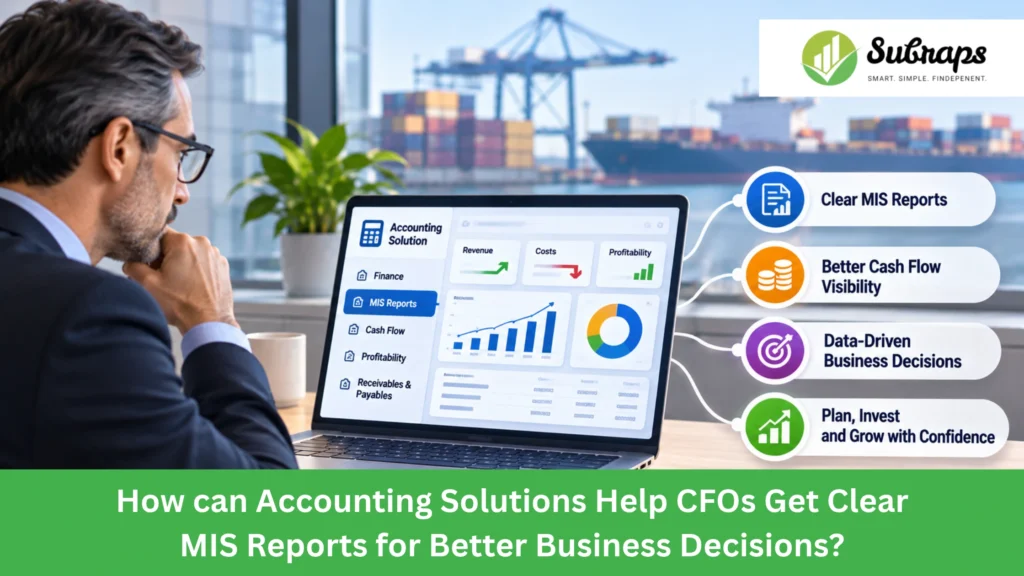
All the numbers are in your accounting software. So why does your CFO still have to wait for clear MIS reports?
For many growing businesses, financial reporting means collecting data, updating spreadsheets, and checking numbers manually. This delays important decisions about profit, cash flow, and expenses.
In this blog, we’ll explain how accounting solutions can make MIS reporting easier and give CFOs the clear financial information they need to make better business decisions.
Why do CFOs Struggle to Get Clear MIS Reports?
Your business may be generating more revenue every month. But can your CFO explain whether that growth is improving profitability and cash flow?
As businesses grow, financial reporting becomes more demanding. Accounting software records daily transactions, but preparing clear MIS reports often requires additional work.
For example, a monthly Profit and Loss statement may show higher revenue, but it doesn’t explain which expenses are reducing margins or why cash remains tight.
Common challenges CFOs face include:
- Financial data spread across accounting software and spreadsheets
- Delays in month-end closing and reconciliations
- Differences between accounting records and management reports
- Difficulty comparing actual results with budgets
- Limited visibility into receivables, payables, and working capital
- More time spent preparing reports than analyzing them
When these problems continue, CFOs spend more time finding answers than making decisions.
A useful MIS report should therefore explain what changed, why it changed, and where the business needs attention.
What should a Clear MIS Report Tell Your CFO?
A clear MIS report should help CFOs understand more than just revenue and expenses. It should show where the business is making money, where cash is getting tied up, and which financial areas need attention.
MIS (Management Information System) reporting brings accounting and business data together to answer three important questions: What changed? Why did it change? What needs attention?
For growing businesses, these reports are particularly useful:
| MIS Report | What It Helps CFOs Understand |
| Profit and Loss | Revenue, costs, and profit margins |
| Balance Sheet | Assets, liabilities, and financial position |
| Cash Flow | Cash inflows, outflows, and liquidity |
| Accounts Receivable | Overdue customer payments |
| Accounts Payable | Supplier payments and obligations |
| Budget vs. Actual | Differences between planned and actual results |
| Cost Centre Reports | Departmental or business-unit performance |
| Financial Ratios | Liquidity, efficiency, and financial health |
For example, a business may report healthy profits but still struggle to pay suppliers. While the P&L shows profitability, receivables ageing may reveal that customers haven’t paid their invoices on time.
Reviewing these reports together helps CFOs understand why profits aren’t translating into available cash.
That’s what makes MIS reporting valuable: it connects financial numbers with the business decisions behind them.
How can Accounting Solutions Improve MIS Reporting for CFOs?
Modern accounting solutions help CFOs move beyond manual spreadsheets and delayed financial reports. By bringing accounting data together, automating repetitive tasks, and improving financial analysis, businesses can prepare more accurate MIS reports and make decisions with greater confidence.
For growing businesses, the real benefit is not just faster reporting. It is having reliable financial information to understand profitability, manage cash flow, control expenses, and plan future growth.
Key Ways Accounting Solutions Improve MIS Reporting
Faster Financial Reporting and Data Visibility: Manual reporting often delays financial reviews. Accounting and reporting solutions can reduce repeated data preparation and give CFOs quicker access to updated financial information, depending on how frequently records are maintained and synchronized.
Centralized Financial Data: When accounting information is spread across multiple spreadsheets, differences between reports become difficult to manage. Integrated reporting solutions bring financial data into a consistent structure, helping CFOs review P&L, Balance Sheet, cash flow, and other MIS reports using reliable accounting records.
Department and Cost Centre Profitability: Total business profit doesn’t always show which departments or activities are performing well. Accounting solutions that support cost centre reporting help CFOs review revenue, expenses, and profitability by department, branch, or business unit, where the underlying transactions are properly classified.
Budget vs. Actual and Variance Analysis: A rise in expenses or a decline in profit needs an explanation. MIS reporting helps CFOs compare actual results with budgets and previous periods, identify cost differences, and understand which areas require management attention.
Cash Flow and Working Capital Visibility: A profitable business can still face cash shortages when customer payments are delayed. MIS reports covering receivables, payables, cash flow, and working capital help CFOs monitor outstanding payments, review financial commitments, and plan cash requirements.
Better Financial Accuracy and Controls: Reliable MIS reporting depends on accurate accounting records. Proper reconciliations, transaction reviews, approval controls, and consistent reporting processes help reduce errors and improve confidence in management reports.
For businesses looking to improve these processes, Subraps provides Accounting and Finance Automation services that support more efficient financial operations and reporting workflows.
Together, these improvements help CFOs spend less time preparing reports and more time understanding financial performance, identifying risks, and making informed business decisions.
How can Better MIS Reports Support Business Decisions?
Clear MIS reports help CFOs make financial decisions based on actual business performance rather than assumptions.
For instance, CFOs can review profitability, operating costs, and available cash to determine whether opening a new branch is financially viable.
MIS reporting also supports important decisions:
- Investment and Expansion Planning: Assess financial readiness before investing or expanding operations.
- Resource Allocation: Identify which departments or business activities need additional funding.
- Credit Decisions: Review customer payment patterns before extending credit terms.
- Strategic Prioritization: Determine which business opportunities deserve financial attention and investment.
With these insights, CFOs can evaluate opportunities, manage financial risks, and support better business decisions.
How can Subraps Help Your Business Make Better Decisions with MIS Reporting?
For CFOs, the challenge isn’t just preparing financial reports. It’s understanding changes in profitability, cash flow, and expenses before they affect business performance.
Subraps helps CFOs and growing businesses through its Financial Accounting, Reporting & Virtual CFO Services.
With structured MIS reporting, Subraps helps businesses:
- Track profitability: Understand revenue, expenses, and changes in profit margins.
- Improve cash flow visibility: Review outstanding receivables, payables, and working capital.
- Identify financial gaps: Compare actual results with budgets and investigate cost variances.
- Make better decisions: Use financial insights to support budgeting, forecasting, and business planning.
Along with MIS reporting, Subraps provides Virtual CFO support to help management understand financial performance and decide where action is needed.
As your finance and business solutions partner, Subraps helps you gain clearer financial visibility, manage financial risks, and make informed decisions that support long-term business growth.
Conclusion
Accurate accounting records are essential, but they are only the starting point for effective financial management.
CFOs also need clear MIS reports that explain profitability, cash flow, expenses, and working capital without requiring days of manual preparation.
With the right accounting solutions and reporting processes, businesses can reduce reporting delays, investigate financial changes, and give management the information needed to make informed decisions.
Book a Free Consultation to discuss how Subraps can support your accounting, MIS reporting, and financial management requirements.
