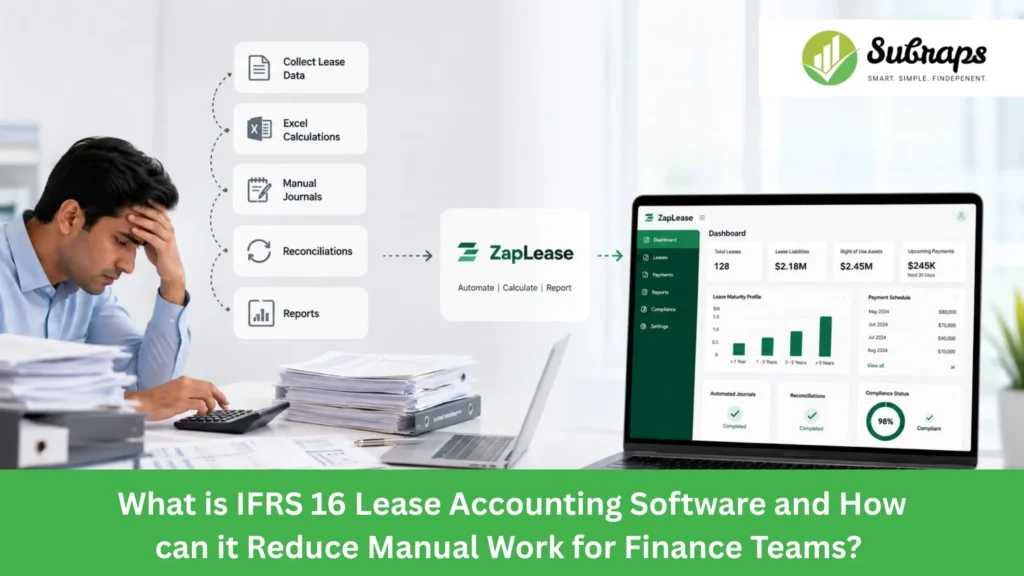
Manual IFRS 16 work can take time away from better decisions.
Finance teams may spend hours checking lease terms, updating calculations, preparing journal entries, and reviewing modifications across separate files.
This repeated work leaves less time to understand the numbers and support business decisions.
IFRS 16 lease accounting software brings these activities into a more structured process, helping teams reduce manual effort and manage lease accounting more efficiently.
What is IFRS 16 Lease Accounting Software?
IFRS 16 lease accounting software is specialized software that helps finance teams track, calculate, and report leases in line with IFRS 16 requirements.
It supports key activities such as lease data management, right-of-use asset and lease liability calculations, journal entries, lease modifications, and reporting in one structured process.
For businesses managing multiple leases, it helps reduce separate working files and keeps lease information more consistent throughout the accounting process.
What Makes IFRS 16 Lease Accounting Complex for Finance Teams?
IFRS 16 can become complex because finance teams need to manage lease data, calculations, changes, and reporting throughout the lease term.
As lease volumes and entities increase, keeping this information accurate and consistent becomes harder.
Operational and Data Challenges
Finance teams need accurate lease details such as payment terms, commencement dates, renewal options, escalation clauses, and discount rates.
If this information is spread across contracts and spreadsheets, teams spend more time checking whether the data is complete and current.
Balance Sheet Changes
Under IFRS 16, most leases are recognized as a right-of-use asset and a lease liability.
Finance teams must calculate these amounts correctly and track interest, depreciation, payments, and balances throughout the lease period.
Lease Modifications and Reassessments
Extensions, rent changes, terminations, or revised payment terms can affect existing lease calculations.
Each change may require the finance team to reassess and update the accounting.
Reporting and Audit Requirements
Finance teams also need clear calculations, schedules, journal entries, and supporting records for reporting and audit review.
As the portfolio grows, keeping this information connected and ready to access becomes more difficult with manual processes.
Where do Manual IFRS 16 Processes Create More Work and Risk?
Manual IFRS 16 accounting can involve several hours of repetitive work across lease processing, journal entries, reviews, and audit preparation.
For a large lease portfolio, a manual process can look like this:
- Up to 64 hours spent processing lease information
- Around 3 days spent preparing journal entries
- Up to 5 days spent getting lease records ready for audit
- Around 6 finance team members involved across the process
- 20 or more working files used to manage lease information
- Around 12 errors per month requiring additional checks or corrections
On top of this, finance teams may need to review formulas, reconcile differences, update lease changes, and confirm that the correct data has been used.
As lease volumes increase, these repeated checks can make IFRS 16 accounting slower, harder to control, and more dependent on manual effort.
How does Lease Accounting Software Reduce Manual Work for IFRS 16?
Lease accounting software reduces manual effort by connecting the main IFRS 16 activities in one structured process. Finance teams can use the same approved lease information across calculations, journal entries, modifications, reporting, and review instead of handling each stage separately.
1. Capture Lease Information Faster
Key details such as commencement dates, payment terms, escalation clauses, renewal options, and discount rates need to be identified before IFRS 16 accounting begins.
Lease accounting software helps capture and organize these details in a structured format, making them easier to review and use.
2. Avoid Re-entering the Same Lease Data
When lease information is maintained in one system, finance teams do not need to enter the same details repeatedly across calculation sheets, journal files, and reporting schedules.
This reduces re-keying and helps keep the underlying data consistent.
3. Automate IFRS 16 Calculations
Lease liabilities, right-of-use assets, interest, depreciation, and related schedules require regular calculations throughout the lease term.
Software can calculate these amounts from approved lease data, allowing finance teams to focus on reviewing the results rather than maintaining complex formulas manually.
4. Reduce Journal Entry Preparation
Recurring lease journal entries can create significant monthly work when many leases are involved.
Lease accounting software can use the calculated lease values to prepare the required accounting entries, reducing manual preparation and checking.
5. Manage Lease Changes Without Rebuilding the Process
Extensions, payment changes, terminations, and other modifications can affect existing IFRS 16 calculations.
A structured system allows finance teams to update the relevant lease and apply the change through the existing accounting process instead of creating new spreadsheets and schedules.
6. Make Reporting and Audit Review Easier
Finance teams need to support reported figures with lease-level calculations, schedules, journal entries, and other records.
Keeping these items connected makes it easier to trace figures and retrieve supporting information during financial reporting and audit review.
7. Handle More Leases Without Adding the Same Level of Manual Work
As lease portfolios grow, finance teams need a process that can handle higher volumes without increasing administrative work at the same rate.
The right lease accounting software can reduce repetitive processing and help teams manage more leases while keeping more time available for review, reporting, and financial analysis.
How does ZapLease Support IFRS 16 Lease Accounting?
For finance teams managing IFRS 16 across many leases, the challenge is keeping calculations, changes, approvals, and reporting consistent over time.
ZapLease supports this by giving teams a structured way to manage the full IFRS 16 accounting process. Lease data can move directly into calculations, journal entries, disclosures, maturity analysis, and portfolio-level reporting without creating separate working files for each stage.
It also supports lease modifications, reviewer controls, and multi-entity portfolios, helping finance teams maintain better control as lease activity becomes more complex.
This gives teams a more reliable way to manage IFRS 16 requirements while keeping the accounting process easier to review, track, and report.
Want to Simplify IFRS 16 Lease Accounting?
If your finance team is still spending too much time checking lease data, updating calculations, and managing IFRS 16 through multiple files, it may be time to simplify the process.
Finance automation can reduce this repeated workload and give your team more time to focus on review, reporting, and financial decisions.
Conclusion
IFRS 16 lease accounting becomes harder to manage when the process depends heavily on manual work.
A more structured and automated approach can help finance teams maintain better control as lease portfolios grow.
Reduce the manual workload in your IFRS 16 process.
Book a Free Consultation to discuss your current IFRS 16 process and identify where manual work can be reduced.
