What happens when your business is growing, but key financial decisions still depend on late reports, unclear cash flow, and incomplete information?
Revenue may be increasing, the team may be expanding, and new opportunities may be appearing. Yet management may still struggle to understand profit margins, working capital, future cash needs, or whether the business can safely invest in further growth.
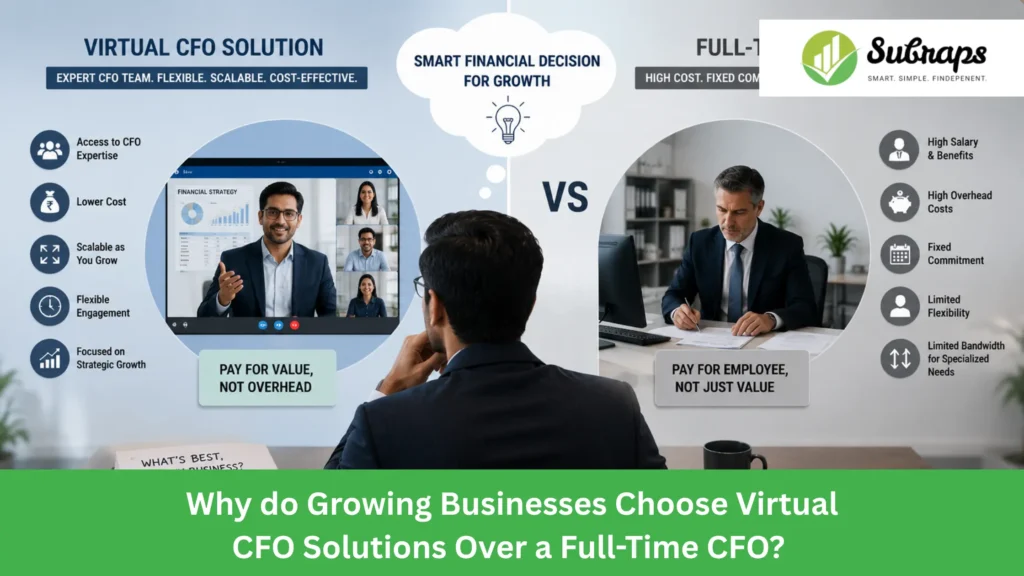
At this stage, routine accounting may no longer be enough. The business needs senior financial guidance, but hiring a full-time CFO can be costly and may provide more support than needed. This is why many growing businesses choose Virtual CFO solutions on a flexible basis.
What is a Virtual CFO Solution?
A Virtual CFO solution is a service, not just one finance professional. It gives a business access to senior financial experience on a flexible, as-needed basis.
Accountants keep financial records accurate, while a Virtual CFO provides wider financial guidance. Understanding the difference between a Virtual CFO and an in-house accountant helps businesses choose the right level of finance support.
They may review profit margins, EBITDA trends, working capital, burn rate, cash needs, and financial risks. This is the main difference between routine accounting and financial leadership.
A Virtual CFO does not replace the accounting team. They work alongside existing finance professionals to improve financial close, reporting quality, controls, and management decisions.
Virtual CFO vs. Full-Time CFO vs. In-House Accountant
Each role supports the finance function differently. The right choice depends on the company’s size, financial needs, growth stage, and level of support required.
| Feature | Virtual CFO | Full-Time CFO | In-House Accountant |
| Typical cost | Monthly retainer based on scope | Salary, benefits, bonus, and possible equity | Salary at a lower cost level |
| Experience level | Senior, often across several industries | Senior with deep knowledge of one business | Operational and day-to-day |
| Commitment | Part-time, flexible, or project-based | Full-time and permanent | Full-time and permanent |
| Best suited for | Growing SMEs and pre-Series B startups | Large businesses with complex finance operations | Transaction processing and compliance |
| Strategic input | Forecasting, fundraising, board reporting, and financial guidance | Embedded financial and business ownership | Mainly recordkeeping and routine reporting |
Core Responsibilities of a Virtual CFO
A Virtual CFO helps management move from simply reviewing numbers to using them for better planning, control, and decision-making.
Financial Planning and Analysis
A Virtual CFO builds a financial plan around the company’s goals and compares actual results with that plan.
They review planned revenue, costs, profit, and cash needs against actual performance. When results differ, they identify the reasons and help management decide what action may be needed.
This gives leaders a clearer view of future performance and reduces decisions based only on assumptions.
Cash Flow Management
A business can be profitable and still struggle to pay on time. This often happens because customer payments are delayed, expenses increase, or working capital is not managed properly.
A Virtual CFO tracks how cash moves through the business and identifies where pressure may develop. They help management plan customer collections, supplier payments, payroll, taxes, and other commitments.
This allows the business to spot possible cash shortages early and keep enough money available for daily operations.
Compliance and Financial Risk Management
As a business grows, financial risk can also increase. Weak approval steps, delayed account checks, incomplete records, poor documents, or dependence on one major customer may create problems.
A Virtual CFO reviews financial controls, reporting gaps, audit preparation, and areas of risk. They work with the finance team to improve approvals, assign clear duties, and maintain better records.
This lowers the chance of unexpected financial issues and gives management greater trust in the information it receives.
Management and Board Reporting
A long financial report is not useful when management cannot understand it or act on it.
A Virtual CFO turns financial data into clear business information, helping leadership make data-driven financial decisions based on current performance rather than assumptions. They may prepare management reports, board packs, KPI reviews, forecasts, and financial comments.
These reports can explain margin changes, rising costs, customer dependence, working capital performance, and progress against targets. The purpose is not only to show figures, but to explain what changed, why it changed, and what needs attention.
Why are Businesses Choosing Virtual CFO Solutions?
Growing businesses often need senior financial guidance before they are ready to employ a full-time CFO. The right Virtual CFO services for SMEs can strengthen financial planning and support better management decisions without adding a permanent executive role.
Lower Cost than a Full-Time CFO
Hiring a full-time CFO involves more than salary. Recruitment fees, employee benefits, bonuses, equipment, and long-term employment costs can make the role expensive.
A Virtual CFO works through a monthly, part-time, or project-based agreement. The business pays for the support it needs rather than carrying the full cost of a permanent senior executive.
Flexible Support that Scales
Financial needs change as the business grows.
A company may need more support during fundraising, annual planning, expansion, or periods of cash pressure. Once the business becomes more stable, a monthly review may be enough.
Virtual CFO solutions allow the level of support to increase or reduce based on current needs.
Independent Financial Review
Internal teams may become used to existing reports, processes, and ways of working. This can make it difficult to notice weak areas.
A Virtual CFO provides an outside view of the finance function. They can identify reporting delays, weak controls, unclear duties, slow processes, and financial risks that may otherwise remain unnoticed.
Fundraising and Investor Support
Raising funds requires more than a strong business idea. Investors and lenders expect reliable records, realistic financial plans, and a clear explanation of how the money will be used.
A Virtual CFO can organize financial information, prepare financial models, support due diligence, and explain important figures to investors or lenders.
Is Your Business Ready for a Virtual CFO?
Your business may need Virtual CFO support when financial decisions become difficult for the current team to manage.
Common signs include:
- Month-end reports are delayed.
- Cash flow is unclear.
- Profit changes are difficult to explain.
- Forecasts are not updated regularly.
- The business is planning funding or expansion.
- Investors or board members need clearer reports.
- Important decisions depend mainly on the bank balance.
- The finance team needs better guidance.
These signs do not always mean you need a full-time CFO. A Virtual CFO can provide flexible financial support while working with your existing accounting team.
How do Virtual CFO Solutions Work?
1. Discovery and Financial Assessment
The process begins with a review of the business model, records, reports, systems, workflows, and management concerns.
The Virtual CFO identifies delays, gaps, control issues, and areas that need attention.
2. Financial Strategy and Setup
The next step is to set financial priorities and assign responsibilities.
This may include improving month-end close, setting a reporting schedule, choosing useful KPIs, preparing financial models, and defining what management or the board needs to see.
3. Execution and Performance Monitoring
The Virtual CFO then reviews the agreed financial work and tracks performance regularly.
They may review the monthly close, management reports, board information, and actual results against expectations.
4. Ongoing Review and Improvement
As the business grows, its financial needs change.
Reports, controls, KPIs, and internal duties are reviewed and improved so the finance function continues to support the business.
How does Subraps Deliver Virtual CFO Solutions?
Subraps combines financial close, reporting, Virtual CFO support, and finance automation in one connected service.
The team works with existing finance staff to improve month-end close, prepare management and board reports, monitor KPIs, support fundraising, assist investor communication, and guide the finance team.
Finance automation is applied to suitable workflows to reduce repeated tasks, manual work, and reporting delays. This helps businesses maintain cleaner records, prepare reports faster, and give management reliable information for decisions.
Conclusion
Growing businesses need strong financial leadership, but they may not need a full-time CFO at an early stage.
Virtual CFO solutions provide flexible support for cash flow, reporting, financial control, fundraising, and important business decisions. They help management understand performance and act with greater confidence.
Schedule a free consultation with Subraps to learn how Virtual CFO solutions, financial reporting, and finance automation can strengthen your finance function. Book Your Free Call
